Press release
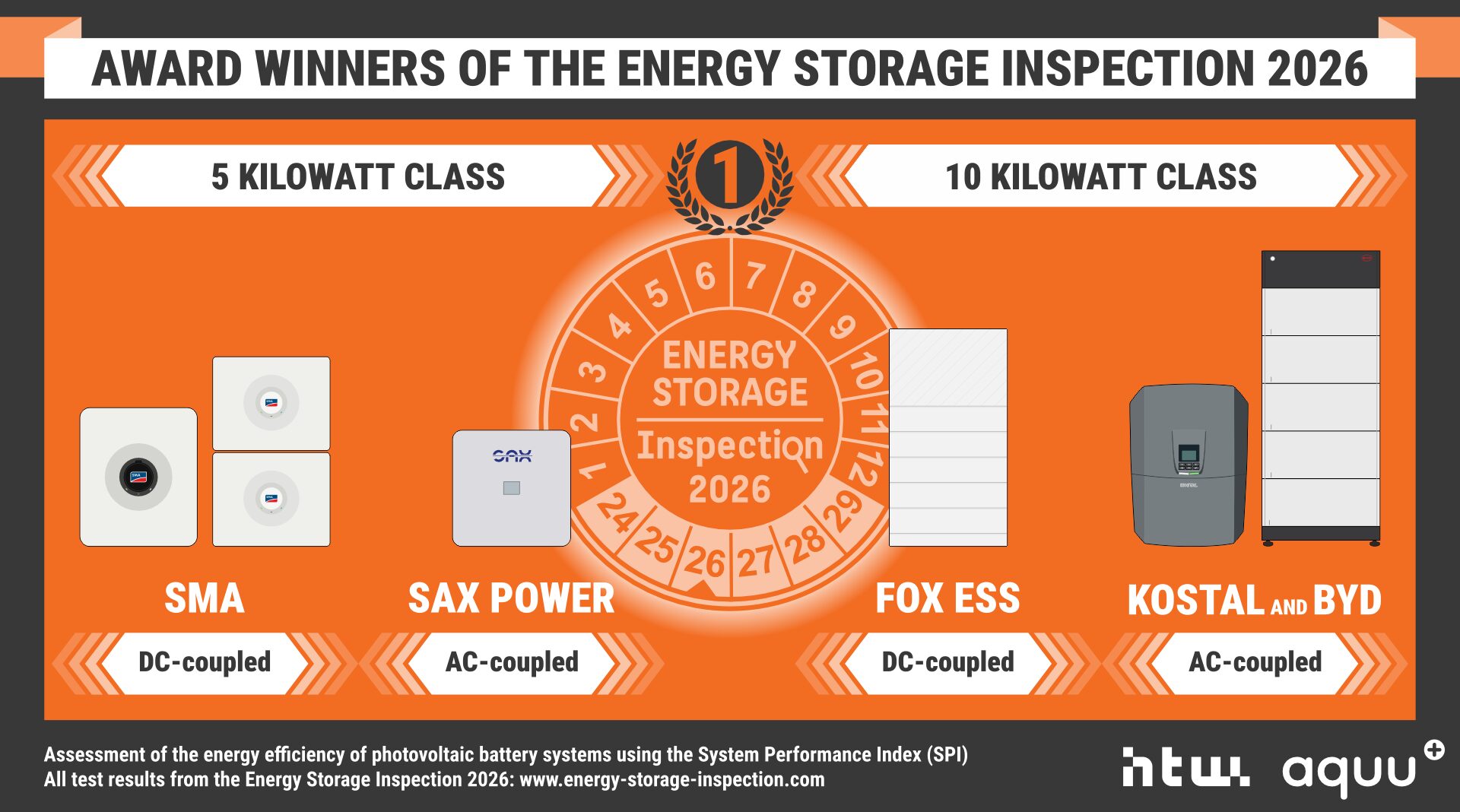
The new winners of the Energy Storage Inspection are Fox ESS, SMA, SAX Power, Kostal, and BYD
Battery experts from HTW Berlin and aquu evaluate 12 home storage systems with the SPI and review the warranty conditions of more than 20 manufacturers.

March 30, 2026
Twelve residential storage systems competed in this year’s Energy Storage Inspection. New test results are available for products from BYD, Fox ESS, Fronius, Kostal, SAX Power, and SMA. All of which achieved efficiency class A. This year, the Berlin University of Applied Sciences (HTW) evaluated the battery storage systems for the first time in cooperation with aquu — a HTW spin-off. Additionally, the researchers explain that storing grid energy only makes sense with efficient storage systems when dynamic electricity tariffs are considered. They also take a close look at the warranty terms of 20 leading manufacturers for home storage systems.
SPI record of 97 percent: Fox ESS’s new storage system is 3.5 times more efficient than the least efficient system
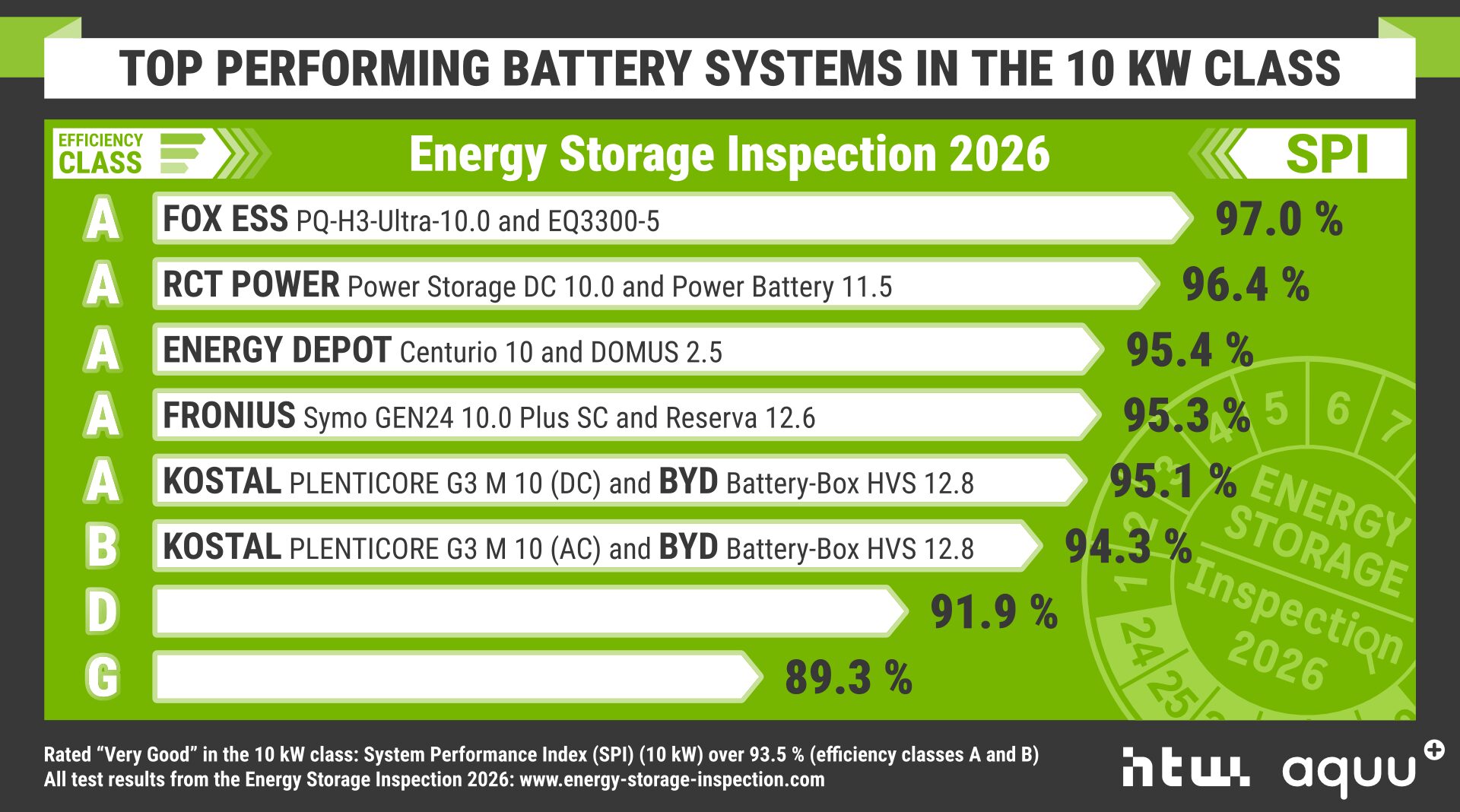
The System Performance Index (SPI) allows for comparison of solar storage systems in the 5 and 10 kilowatt power classes. Among 10 kW hybrid inverter storage systems, the PQ-H3-Ultra-10.0 from Fox ESS had the highest SPI, at 97 percent. The new test winner impresses with its very high average efficiency levels of over 97.6 percent and its low standby power consumption of only 4 watts. Storage systems from RCT Power, Energy Depot, Fronius, and Kostal, when combined with BYD, also achieved an efficiency class of A with an SPI above 95 percent. The bottom-ranked system in the storage comparison achieved an SPI of only 89.3 percent and fell into efficiency class G. The reason: High losses in the battery system and a standby power consumption of 64 W reduce the system’s efficiency.
SAX Power and SMA crowned new test winners in the 5 kW power class
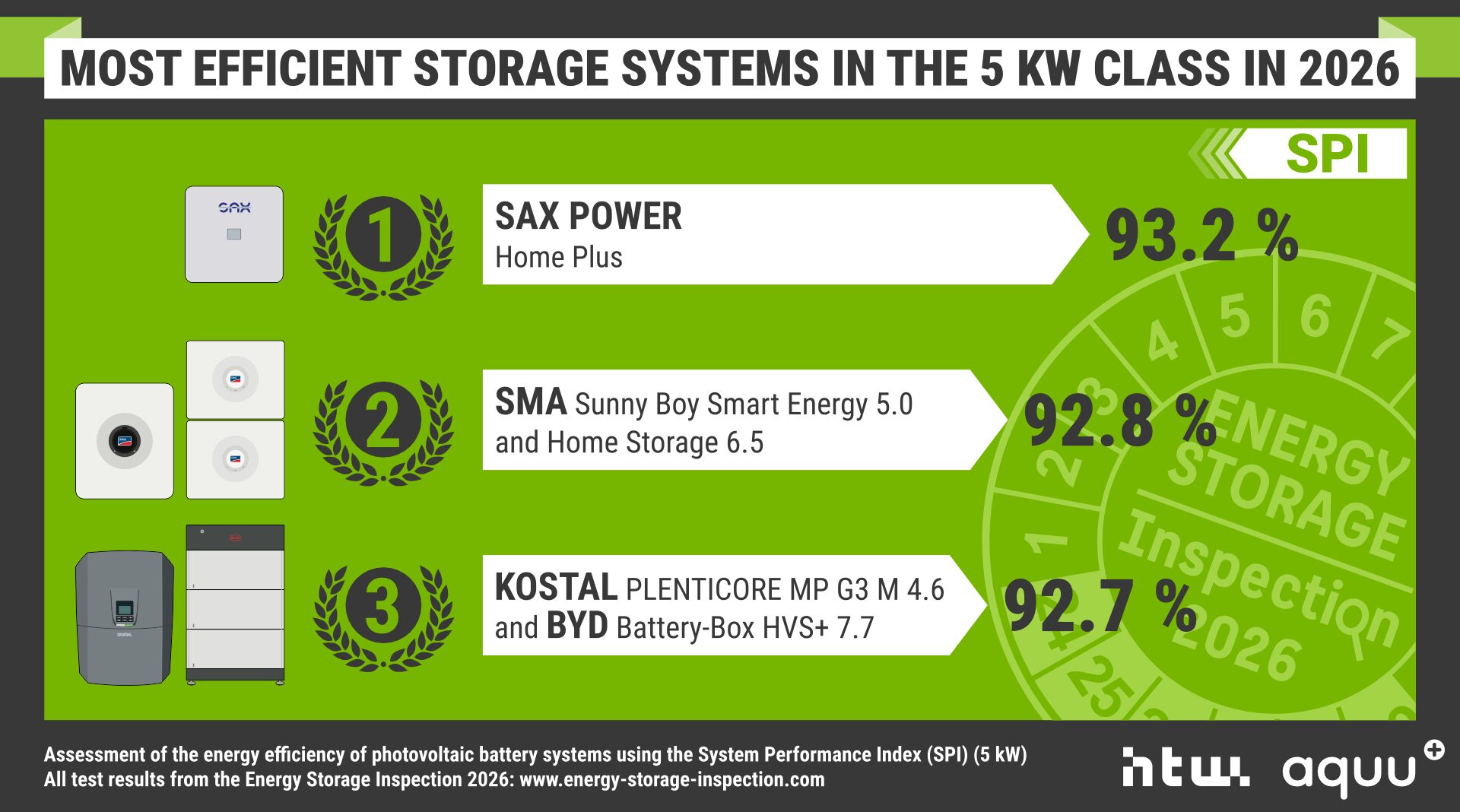
In the small power class up to 5 kilowatts, the AC-coupled battery system SAX Power Home Plus, which is based on so-called multi-level technology, established itself as the top performer. Among the 5 kW systems with hybrid inverters, SMA achieved the highest SPI rating with the Sunny Boy Smart Energy 5.0 and the Home Storage 6.5 battery. Kostal followed closely behind with the PLENTICORE MP G3 M 4.6 hybrid inverter, which was assessed for the first time in combination with the new BYD Battery-Box HVS+ 7.7 battery system.
Dynamic electricity prices: Storing grid electricity is only beneficial with efficient storage systems
With a dynamic electricity tariff, households equipped with battery systems can benefit from price fluctuations on the electricity market. An intelligent energy management system, based on energy and price forecasts, determines when and at what power level the battery is charged. The goal: To charge the battery using low-cost grid electricity and to supply electrical appliances with the stored electricity during periods of high prices. “Whether charging the battery with grid power is even profitable for households with dynamic electricity tariffs depends largely on the level of conversion losses,” explains Johannes Weniger, Founder of the Energy Storage Inspection and CEO of aquu.
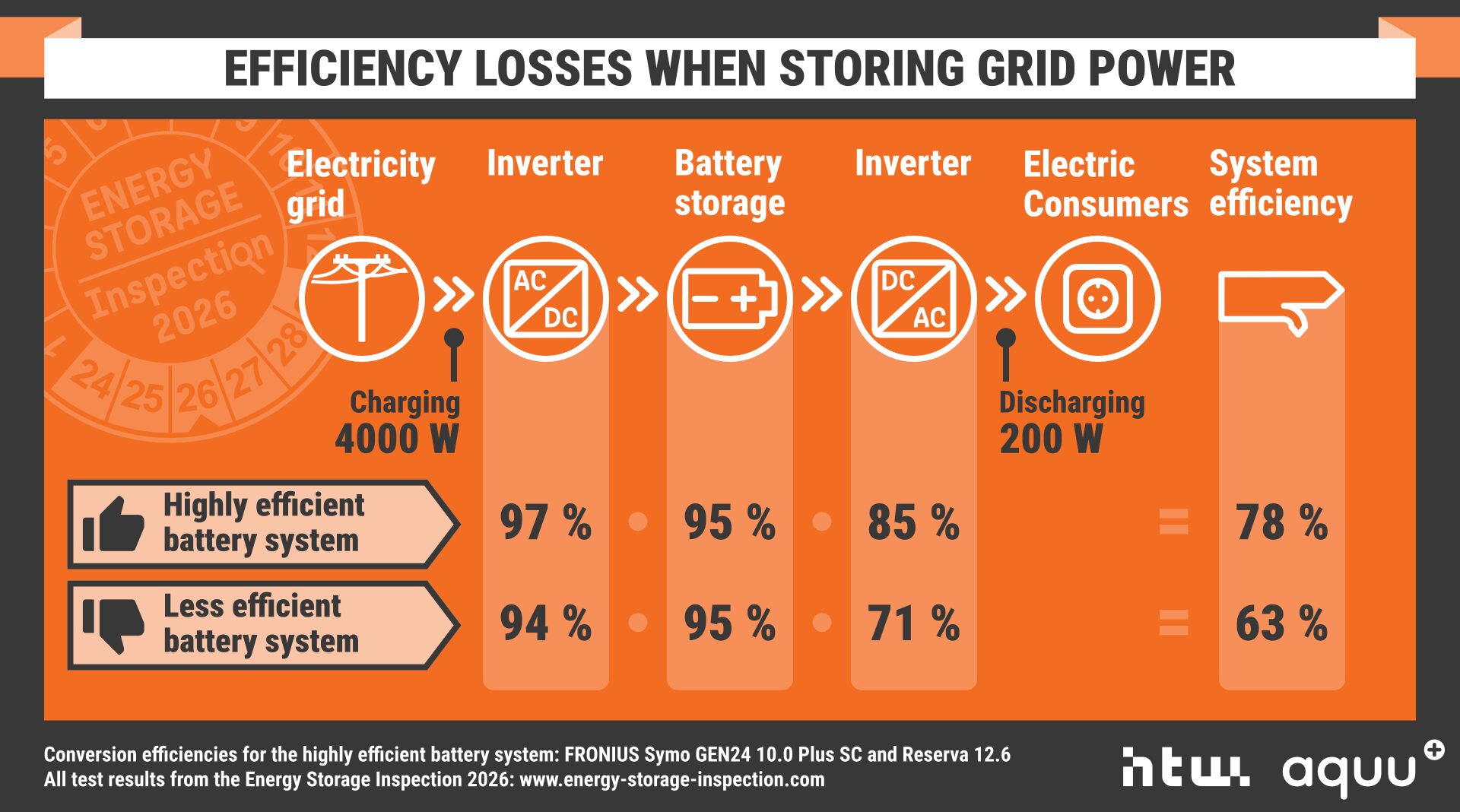
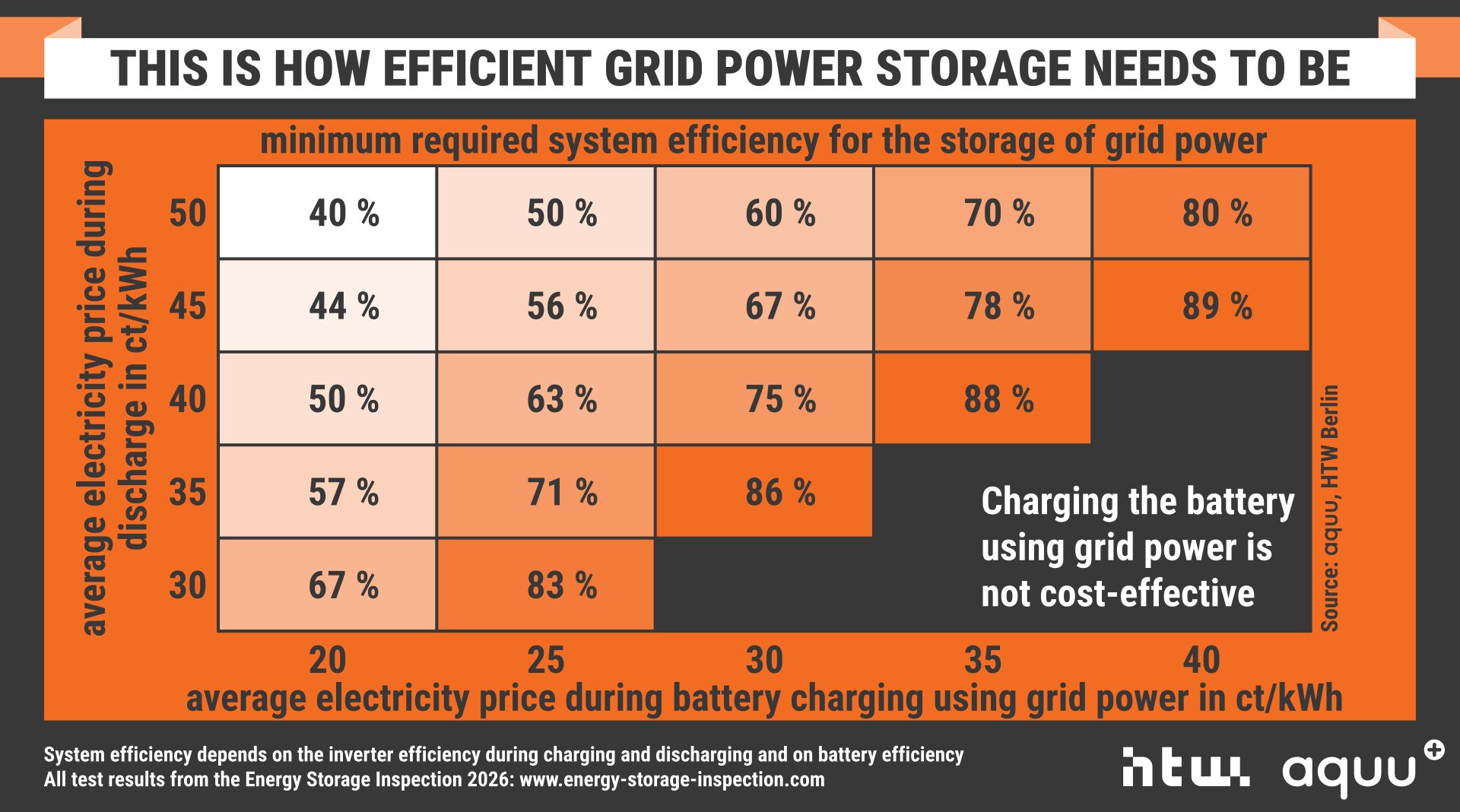
How low must storage losses need to be for charging the battery with grid power to be cost-effective?
This question can be answered using a typical winter day as an example: With an electricity price of 25 cents per kilowatt hour, the battery draws power from the grid at night. In the evening hours, when electricity from the grid costs 35 cents per kilowatt hour, the battery powers the household appliances. In this specific case, however, storing grid energy is only beneficial for the household if the inverter and battery losses are less than 29 percent. Or to put it another way: The system efficiency resulting from storing grid power must be higher than 71 percent. The test results show that storing grid energy in combination with dynamic electricity prices is not profitable with all battery systems. Nico Orth, Head of the Energy Storage Inspection at HTW Berlin, explains the challenge as follows: “The price difference between the charging and discharging periods is often not large enough to compensate for the battery system losses.” The study provides a detailed description of the maximum allowable conversion losses under other pricing scenarios.
Hidden traps in the fine print: What to look for in warranty terms
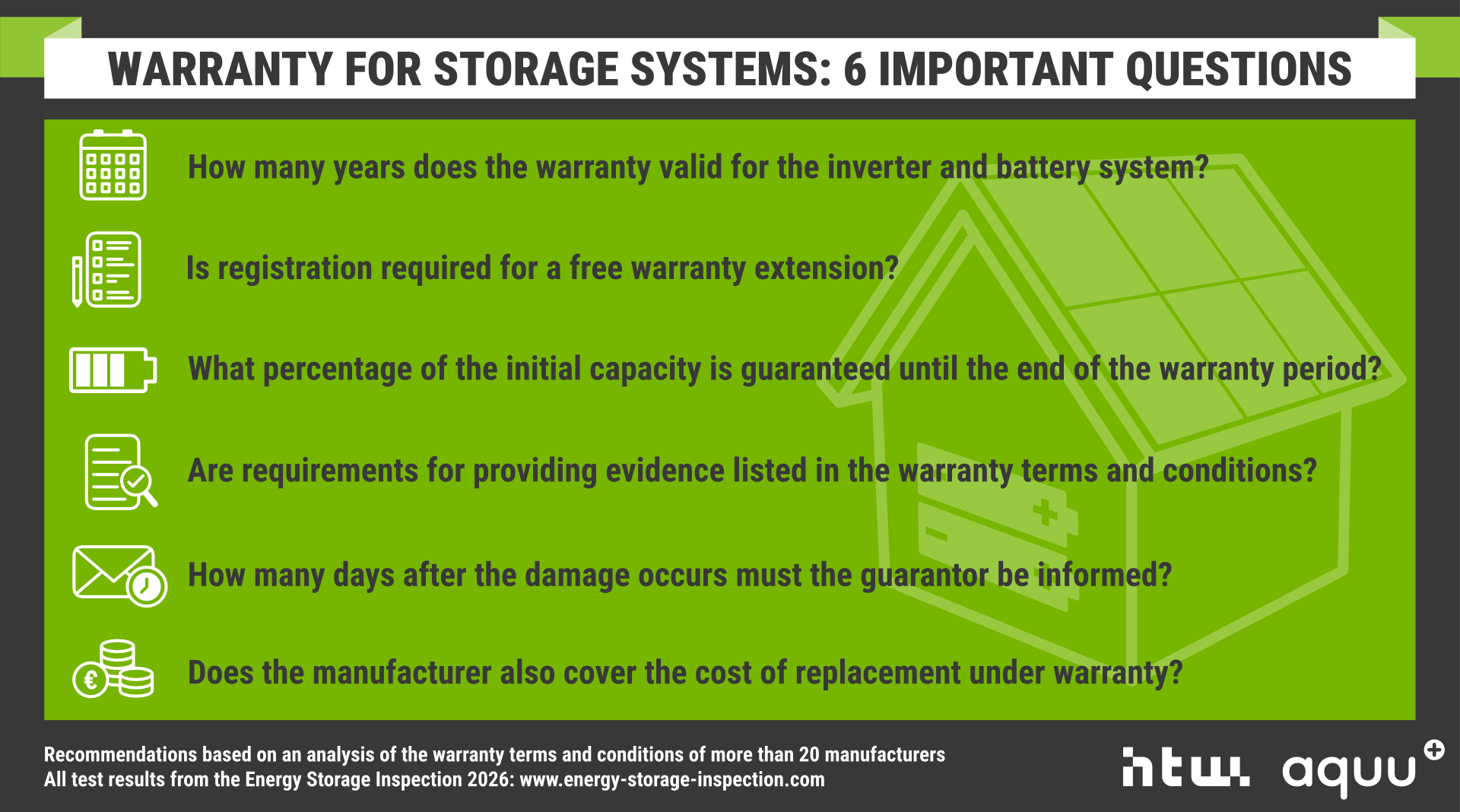
While the energy efficiency of a storage system is important, it shouldn’t be the only criterion when choosing one. That’s why the researchers in Berlin took a closer look this year at the warranty terms of 20 leading manufacturers and found significant differences in some cases. Here’s an example: Depending on the storage system, the manufacturer guarantees that the battery capacity will not drop below 60 to 85 percent of its initial value during the warranty period. The higher this value, the more beneficial it is for the homeowner operating the battery system. “Checking the warranty terms before purchasing a storage system can help you avoid unpleasant surprises in the event of damage. Favorable warranty terms include the manufacturer not imposing extensive obligations on you to provide evidence and by them covering the cost of replacement in the event of a fault,” says Nico Orth of HTW Berlin. The authors of the Energy Storage Inspection provide further recommendations in the test report.